It is the 54th day of Iavas
In the 3015th year of the Sun
Of the Third Age of Middle-earth
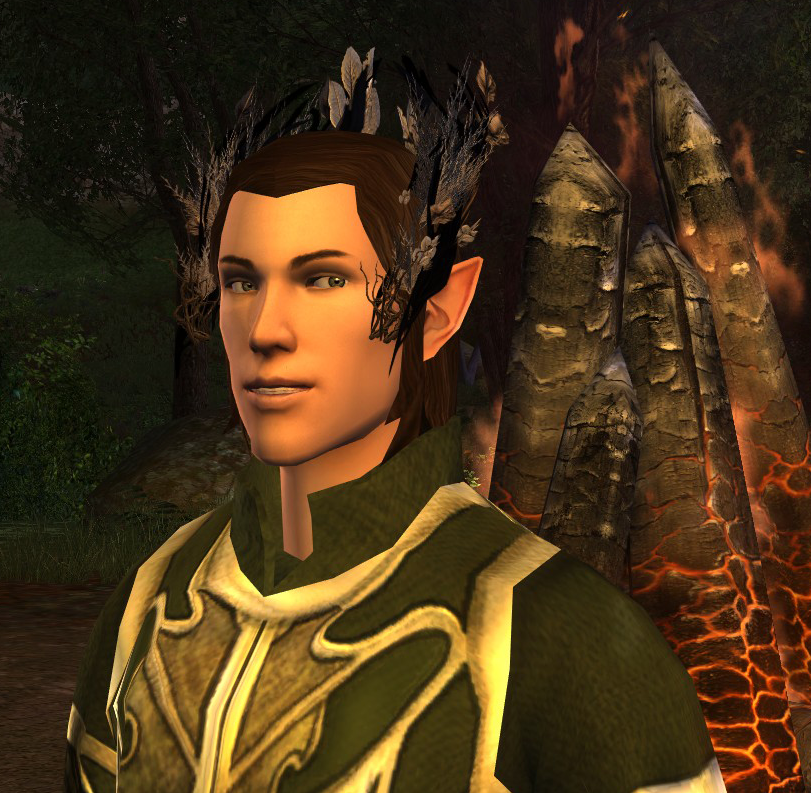 It might well have been a night of the Elder Days ere the rising of the Moon, for naught but starlight lit the oak-encircled glade and glimmered on the swift waters of the Forest River flowing beyond the trees. A bright fire and torches of gold and silver light were kindled to push back the darkness of the forest, harps were strung, our hair twined with leaves and flowers, and food and wine aplenty brought forth, for it was a night of feasting and song.
The hearts and spirits of the gathered Laegil and Tawarwaith rose high, and our voices rang out in mirth and laughter amidst the beech and oak and elm. This merry feast was held in my honour, for it is now one and fifty years of the Sun since my begetting[1], and my days of childhood are behind me[2]; and though aforetime such celebrations were commonly held in Ethuil, the trees that looked on bore the red and gold leaves of Iavas, and the soft wind that blew down from the far-off Ered Mithrin was crisp and cool.
Fair songs were sung that recalled the merry, carefree days that delighted woodland elf-children in bygone days, mingled with songs praising the merry, carefree days that full-grown forest-elves yet live despite the 'burden' of their duties. Autumn songs of falling leaves and the waning Sun filled the night, and songs of homecoming for the Enderi rose up into the starry sky.
Come home, come home, ye merry folk!
The sun is sinking, and the oak
In gloom has wrapped his feet.
Come home! The shades of evening loom
Beneath the hills, and palely bloom
Night-flowers white and sweet.
Come home! The birds have fled the dark,
And in the sky with silver spark
The early stars now spring.
Come home! The bats begin to flit,
And by the hearth 'tis time to sit.
Come home, come home and sing!
Sing merrily, sing merrily, sing all together!
Let the song go! Let the sound ring![3]
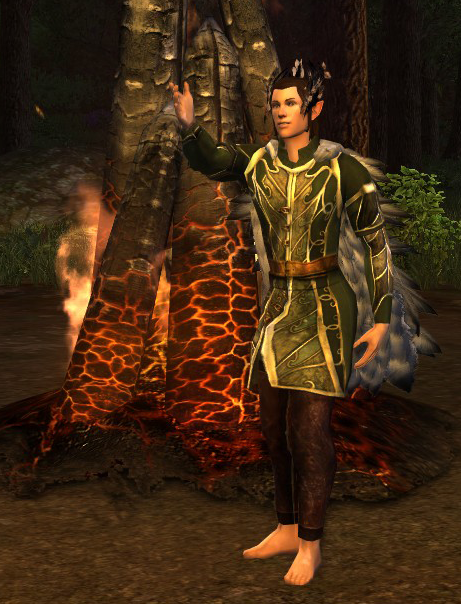

But there is one song that yet lingers in my mind: Amdirvilui sang a mirthful verse of a like autumn feast seven and seventy years before, which was interrupted over and again by a party of lost Dwaves. Now I well know the tale of the company of Thorin son of Thráin of the House of Durin, but this song told that one of the party was a perian, a halfling, who afterwards allayed the wrath the Lake-men held for the Longbeards of Erebor ere the Battle of Five Armies. "Bilbo Baggins" he was named, and about this perian and his folk I have become very curious indeed. Whence came the Periannath? Whither did they go? Are they akin to Men or Dwarves, or are they a people apart?
Many questions have I asked my kin about the periain, but I have gleaned little save a rumour that they dwell in a green country beyond the high Hithaeglir in the North-West lands of Middle-earth, east of the Sea. The erstwhile Sindar of King Thranduil's court were better versed in Periannath lore, but not by much: I learned that they name themselves "Hobbits" and are said to be a merry folk, fond of food and drink, and they possess the art of disappearing swiftly and silently, much like we of the Silvan folk -- could they be akin to Elves? For it is also said that their ears are slightly pointed and elvish![4] Nay, that cannot be so...
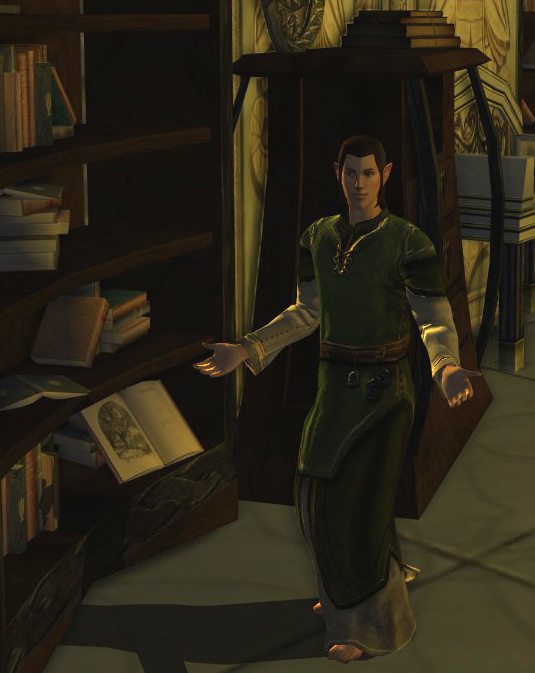 The Halls of the Elvenking holds little lore, and oft have I read the store of scrolls and tomes that King Oropher's people brought from Doriath -- indeed, it was within these very Halls that I learned to read and write! -- but I have seen naught therein concerning Hobbits. In truth, what I chiefly learned was that the poetry of the High Elves longs ever for the past glory of Valinor, but the songs of the Wood-elves abide in the here and now; they cherish their past and care little for the present days of Middle-earth, and their songs are aloof, solemn and lofty. Calaquendi, "Elves of the Light", they name themselves in their Quenya tongue, and us they call Moriquendi, "Elves of the Darkness" -- but our songs are the lighter! Theirs are songs of grandeur and melancholy, but ours are carefree and merry. But my thoughts wander...
Tidings of my quest reached the ear of Teithoron, scribe of the king, and he showed to me a report that he had scrivened some years after the Battle of Five Armies, for the king had also desired to know more about Bilbo Baggins and had sent forth scouts to gather what knowledge they could. This manuscript written in his fair hand bore many answers to my questions:
It told that aforetime periain dwelt in the upper vales of Anduin, between the eastern eaves of Eryn Galen and the Hithaeglir, but they departed during the time the Tawarwaith were fleeing northwards from the perilous Shadow of Dol Guldur. Now they dwell apart from the world of Elves and Men in a land in Eriador they call "the Shire", which in Sindarin is 'Trann', that was once a region of the Northern Kingdom of Arnor. There the king had many farms, cornlands, vineyards, and woods; and the periain yet till that fertile soil and grow fields of grain, orchards of fruit and nuts, and gardens of vegetable and berries, and there are yet many wide woods. But the scouts told also of a strange herb with pale fragrant flowers that they named galanes, which the periain grow on warm sheltered hillsides; and it is their custom to imbibe, through pipes of clay or wood, the smoke of its burning leaves! What folly is this? Wherefore would they do this, and whence could such a custom come?
The Periannath themselves are a little people, smaller than Naugrim and beardless; and they are a merry folk who laugh, eat and drink often and heartily. They are peaceful and delight in things that grow, and enjoy a close friendship with the earth. They are quick of hearing and sharp-eyed, and have long and skilful fingers; their feet are clad in a thick curling hair and thus is it common for them to walk unshod. And there is another strange custom that many yet keep: dwelling in burrows beneath the earth. This much have I learned and more besides, and in my heart I feel a fondness for these folk I have never seen, and a desire to meet them grows within it. But their green land lies two hundred leagues to the West as the eagle flies, and I, who has never left the confines of Mirkwood, deem a journey thither a daunting thought!
 At the Feast Under Stars I was given a gift by Teithoron that greatly gladdened my heart: this book! It is bound in soft leather the colour of red leaves in autumn, and many are its pages of smooth clean parchment, upon which I shall henceforth record what lore and wisdom I yet may learn, and my musings and my chronicle.
Three days have passed since the feast, and thus far I've transcribed within its pages a history of the Laegrim of the Woodland Realm (which I've ventured to write in the manner of the loremasters of old!) and this page which marks the beginning of my tale.
[1] "As for the begetting and bearing of children: a year passes between the begetting and the birth of an elf-child, so that the days of both are the same or nearly so, and it is the day of begetting that is remembered year by year. For the most part these days come in the Spring."
- Morgoth's Ring, 'The Laws and Customs Among the Eldar'[2] "Not until the fiftieth year did the Eldar attain the stature and shape in which their lives would afterwards endure, and for some a hundred years would pass before they were full-grown."
- ibid[3] Annotated Hobbit by Douglas Anderson - J.R.R. Tolkien's draft of a verse entitled 'Elvish Song in Rivendell' not published in The Hobbit)
[4] "A round, jovial face; ears only slightly pointed and 'elvish'; hair short and curling (brown)."
- The Letters of J.R.R. Tolkien, #27
(The argument regarding elve's ears is never-ending!)
 |
2 |
 |